
Thursday, September 1, 2011

No more Starz Play (whatever that is) on Netflix

No more Starz Play (whatever that is) on Netflix

This always seemed like a weird contractual hack to begin with: a small badge on the thumbnail, and a few-seconds clip of the Starz logo whenever one of these movies started playing. It’s very out of place in the Netflix experience.

It always seemed obvious to me that Netflix was doing the bare minimum to hold up its end of whatever cross-promotion deal it had with Starz. It wouldn’t surprise me if Starz had expected an entirely different implementation–or, perhaps, the executives at Starz, in classically clueless media executive form, simply thought something like ‘this Silly Internet Thing won’t go anywhere anyway’.

Now Starz is jealous of the (relatively) sudden surge in Netflix’s popularity, which must make the deal seem in retrospect like Netflix got a bargain. But what is Starz going to do now? Launch Starz Play as a separate, for-pay, web-based service, most likely limited to an extent so as to lure people back to the ‘real’, original service? Good luck with that. How many, like me, had never heard of Starz before signing up for Netflix, and would never consider subscribing to cable TV ever again? And let’s not forget that you can’t just appear on Apple TVs and Rokus and PS3s and Blu-ray players and John Siracusa’s toaster overnight.

As is becoming customary, I’ll pick on Gruber a little:

This is the problem with being a middleman.

It’s not exactly clear which of the two parties he means, but the implication seems to be one of:

  1. Netflix is behaving like a middleman, and made a poor decision in doing so.
  2. Starz is behaving like a middleman, and made a poor decision in doing so.

Given the context, the first seems more likely to be Gruber’s intent, but it makes the least sense. Netflix is delivering the service directly to the end user–interacting directly with the end user. That’s not at all like being a middleman.

Starz is, pretty much by definition, a middleman. They’re in the middle between the customers and the thing that the customers want, but they don’t directly provide anything to customers (in this context), and they don’t actually own anything of value. They’re only there to sign paperwork and move money around. But it’s not clear at all that this worked out poorly for them. If anything, the Netflix deal probably made very little difference to Starz, and the missed opportunity Starz bitterly hints at probably only exists in their imaginations. At the very least, they got some cash and some brand name recognition out of the deal. What would they have gotten if they had tried to make it on their own instead? Anything’s possible, but all you really need to answer that is to look at how many other old, bumbling media companies have tried and failed at that Silly Internet Thing in the past few years.

However, I agree with Gruber that middlemen are, in general, a problem. Technical people, as are his audience, abhor inefficiencies; and now that video is nothing more than bits on a wire, such entities need no longer exist, and only persist in putting their sticky hands all over everything because of their stubborn, selfish ways.

And yet, I’m not convinced that the original Starz deal was a mistake for Netflix. It served its purpose: it seems likely that, when it was originally signed, it might not have been merely expensive, but impossible for Netflix to obtain those titles by other means. In other words, the movie studios have been so afraid and so hesitant of this Scary Internet Thing that so-called (I apologise in advance) ‘high-value’ titles may have been unavailable at any price. This deal at least gave Netflix some, if not many, big-name titles that people could recognise and might draw them into the service. Of these, Netflix may have few today, but had many fewer a few years ago. But Netflix has persisted in pursuing deals directly with the studios since then, and the Starz deal may not be as necessary to their survival any more. Certainly, that’s the picture Netflix paints about the situation. Time will tell.

Oh, and one last thing:

When the agreement expires on February 28, 2012, Starz will cease to distribute its content on the Netflix streaming platform.

As a general rule of thumb, don’t trust anyone who describes what they’re selling as ‘content’.
Thursday, September 1, 2011

ive been reading some analysis and disbelief as

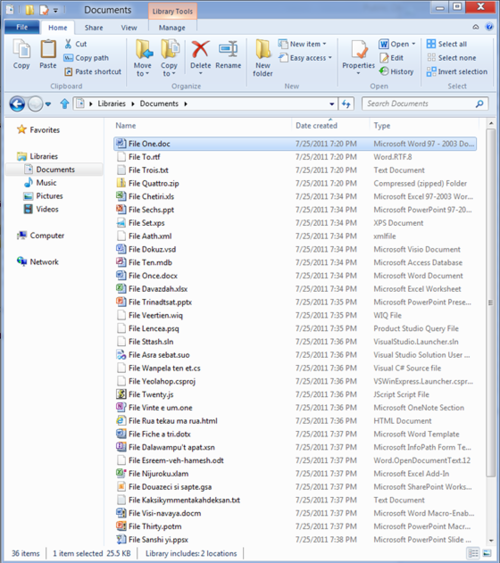
I’ve been reading some analysis and disbelief as to how and why Microsoft would make a design like this for Explorer.

But I haven’t yet read what seems like the most obvious explanation: they felt they needed to do something; the Ribbon seems to have worked before, in Office 2007; so they repeated what they did before, with the Ribbon.

This is what business people do: they repeat what worked before, and expect it to work again. And again. Forever. When that stops working, they either retire on a big pile of money, or find someone else’s idea to leech off of and repeat.

It’s hard and risky to create something new. Who wants that?

Tuesday, August 30, 2011

The best ideas have to win, otherwise good people don’t stay. 

The best ideas have to win, otherwise good people don’t stay. 

Steve Jobs

Wednesday, August 24, 2011

We built it for ourselves. We were the group of people who were going to judge whether it was great or not. We weren’t going to go out and do market research. We just wanted to build the best thing we could build. When you’re a carpenter making a beautiful chest of drawers, you’re not going to use a piece of plywood on the back, even though it faces the wall and nobody will ever see it. You’ll know it’s there, so you’re going to use a beautiful piece of wood on the back. For you to sleep well at night, the aesthetic, the quality, has to be carried all the way through.

We built it for ourselves. We were the group of people who were going to judge whether it was great or not. We weren’t going to go out and do market research. We just wanted to build the best thing we could build.

When you’re a carpenter making a beautiful chest of drawers, you’re not going to use a piece of plywood on the back, even though it faces the wall and nobody will ever see it. You’ll know it’s there, so you’re going to use a beautiful piece of wood on the back. For you to sleep well at night, the aesthetic, the quality, has to be carried all the way through.

Steve Jobs (1985)

Saturday, August 20, 2011

PowerMate 3.0 volume scripts for Mac

PowerMate 3.0 volume scripts for Mac

In previous versions of Mac OS X, you could hold shift+option while pressing volume up/down keys on the keyboard, to increase or decrease the volume by minute amounts. I used this frequently and it drives me crazy that it’s absent in Lion.

There are a few possible workarounds, but as I already had a neglected PowerMate sitting on my desk, I figured I may as well dust it off.

Unfortunately, version 3.0 of the PowerMate software has lost the ability to increase or decrease system volume by small amounts, which was present in previous versions. By default, it only simulates the volume up/down key presses, like a keyboard, which is of no help to me. But, after Googling for a few minutes, I was able to combine several bits of information I found into this:

This may not be the best way to accomplish this. Please submit improvements via GitHub.

One nice thing about 3.0 is that you can paste inline AppleScript to assign to an action (if you can ever figure out how to use it - the UI is a nightmare).

Thursday, August 11, 2011

Lukas Mathis on why the patent system is broken

Lukas Mathis on why the patent system is broken

Excellent, clear, and concise summary.

Also a much better response to Gruber than I wrote.

Friday, August 5, 2011

It is not the spoon that bends

Rands:

For those of you not familiar with the situation, in the latest release of Mac OS X, Apple reversed the scrolling action. Your scrolling wheel or your two-finger trackpad drag go in the opposite direction. Cruel joke, right? Did they swap the left and the right buttons on the mouse, too?

This reminds me of a story.

I was summoned to the CEO’s office to help with some kind of issue she was having with her Mac. Probably something fairly difficult, because she was already a ‘power user’ and a programmer, not to mention a self-taught mechanical engineer.

As most of us with any kind of technical skill know, the temptation in these sort of situations is to simply take over the mouse and keyboard, because you know you’ll be able to solve the problem so much faster. But I find it’s always valuable to keep your own hands off the computer, and instead relay instructions verbally (and by occasional pointing at the screen), while explaining what’s going on and your own thought process, each step of the way. Even if the other person doesn’t want to do it this way, even if they say ‘why don’t you just do it for me?’, you should still have them perform the actions, because it empowers them, and they will almost certainly benefit from having done this in the future, even if not in a way that either of you expect.

But for whatever reason, in this case, I did the wrong thing and took over the mouse and keyboard.

I clicked around for a few seconds confusedly, feeling that something was wrong. Context menus were appearing out of nowhere. The computer wasn’t doing what I told it to. Finally, I figured out that I needed to left-click on the right side, and right-click on the left side - this despite the fact that the user was right-handed, and the mouse was on the usual (right) side of the keyboard. But even after figuring this out, I still found it very difficult to continue, and kept clicking the ‘wrong’ side by accident.

Finally: ‘Your mouse buttons are backwards’, I somewhat stupidly informed her of something she obviously already knew.

Having been watching me, she quickly responded: ‘No; you’re backwards.’

It has taken me a while to realise that the people who are best to work with are those who do not hesitate to make drastic changes to their habits when they discover a better way.

Think different.

Wednesday, August 3, 2011

Google says we bought Novell patents to keep them from Google. Really? We asked them to bid jointly with us. They said no.

Google says we bought Novell patents to keep them from Google. Really? We asked them to bid jointly with us. They said no.

Brad Smith, Microsoft General Consel

Wednesday, August 3, 2011

Gruber on Google on Patents and Products

Gruber on Google on Patents and Products

It’s OK for Google to undermine Microsoft’s for-pay OS licensing business by giving Android away for free, but it’s not OK for Microsoft to undermine Google’s attempts to give away for free an OS that violates patents belonging to Microsoft?

Yes.

The first thing is OK, the second thing is not OK. Again: Yes.

These two things are not at all comparable, but Gruber sets them apart as though it were a foregone conclusion. I don’t even see what the argument here is supposed to be.

The ‘free’ gripe apparently annoys him so much that he even reiterates it as the last sentence:

And, let’s not forget, give Android away for free.

What exactly is the problem with this?

Are we still bitter about the IE vs Netscape days? Speaking of which, let’s not have any sympathy for Microsoft on this topic, shall we?

Should all open-source software be banned, because it’s free? I’ve never heard Gruber argue this. His usual problem with open-source software is that it’s just not any good. Does that mean the problem with Android is that it is good? Good or free is OK, but good and free is not? Why?

Fine, for the sake of argument, let’s suppose Google shouldn’t be allowed to give Android away for free. How much–or rather, how little–are they allowed to charge for it? The same price as their competitors? Half the price? A quarter of the price? Where do you draw the line, and how do you draw a line that is anything but completely arbitrary?

How little is too little? How little do you have to charge before you’re being unfair (or whatever the problem is, since it’s never stated) to your competition?

I have no love for Android. (I’ve never even used it for any meaningful period of time.) But I don’t see what the argument is against it being free, especially since the argument is apparently so obvious that Gruber hasn’t bothered to write it.

Maybe his real problem here is the patents. But that being the case, even if you accept that patents are a positive for the industry (which I don’t), I still don’t see what the product being free has to do with it. And let’s not forget, Microsoft already profits handsomely from licensing parents to Android phone manufacturers - five times as much as they make from selling their own phones! Are we to believe this isn’t enough?

That is the true absurdity: that it’s more profitable to write up a patent and do nothing but demand the earnings of others, than it is to go to the work of bringing a product to market.

Edit: Removed an unfair, unsupported statement I made about Android.

Tuesday, August 2, 2011

YouTube: A New Way To Embed YouTube Videos

YouTube: A New Way To Embed YouTube Videos

This post is from last year, but I’ve started seeing HTML5 YouTube embeds in the wild recently, and I was curious about it. So I went to a random YouTube video and looked for the embed link, and it gave me the ‘new way’ embed code by default.

So either they’ve switched this on for good, or they’re in the process of doing so. You can never really tell with Google and their silent, slow roll-outs.

But I can confirm it works nicely with the Flash plugin uninstalled (as I’ve had it since Apple stopped shipping it with new Macs), even if you’re not in the ‘HTML5 trial’. The sad part is, though, I still don’t get the HTML5 fallback when browsing the YouTube web site itself - only if I join the HTML5 trial, which, for me, has only ever worked sporadically and randomly turns itself off.

13 of 47